


If you prefer to always view the website in English, please click here.
{{content.phone.title}}
{{content.phone.text}}
{{content.phone.phoneText}}
{{content.form.title}}
{{content.form.text}}
{{content.form.success.title}}
Electricity consumption meters: the key tool to understand and reduce your bill
Electricity consumption meters are a simple yet highly effective tool to understand where your home's energy is actually being used. They enable you to detect hidden consumption, adjust your habits and reduce your bill.
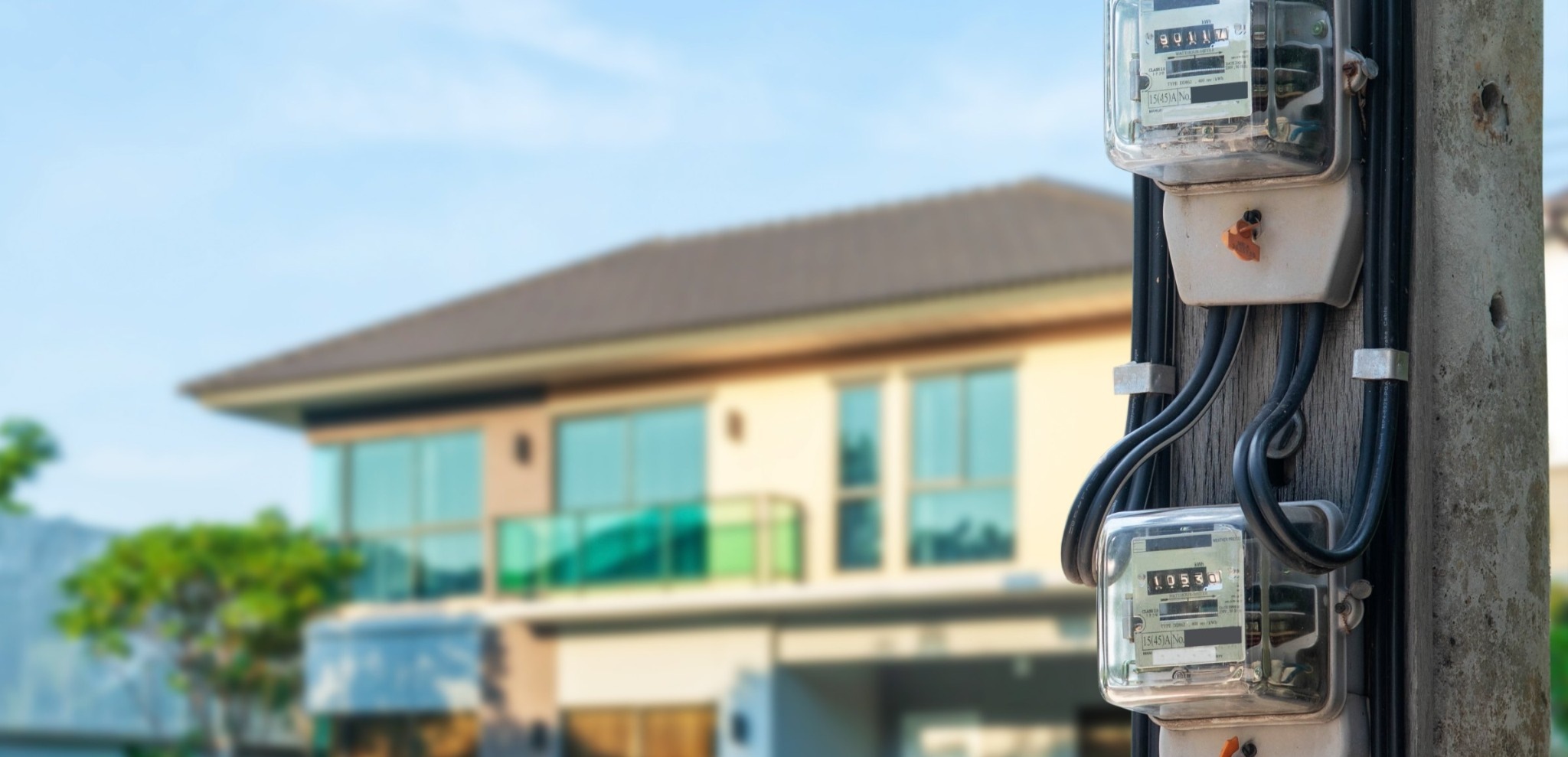
Controlling household electricity consumption is one of the most effective steps to save on your bill and improve energy efficiency. However, we often do not know exactly which appliances consume the most, how much a device actually uses in standby mode, or whether a change in habits is having a real impact.
That’s why electricity consumption meters have become a simple, accessible and very useful solution to answer all these questions. And the best part? They allow you to make informed decisions without major investments.
Read on to discover what they are, how they work, the types available and why they can help you save more than you might imagine.
What an electricity consumption meter is and what it is for
An electricity consumption meter is a device that shows you how much energy a specific appliance or circuit in your home uses. Its main function is to measure consumption in real time in watts (W) and kilowatt‑hours (kWh), the unit shown on your electricity bill.
The main upside is that these devices not only show instantaneous consumption but also allow you to:
- Log cumulative energy use.
- Calculate the monetary cost according to your tariff.
- Detect hidden or unusual consumption.
- Compare appliances to see which are more efficient.
- Identify demand peaks and habits that drive up costs.
According to the Organisation of Consumers and Users (OCU), consumption meters are one of the most reliable tools for determining an appliance’s real usage, especially for older devices or those without an up‑to‑date energy label.
How consumption meters work
They are very simple to use. In most models, you just plug the meter into the power socket and then connect the appliance to the meter. From then on, the device records following data:
- Instantaneous consumption (W).
- Energy consumed (kWh).
- Usage time.
- Estimated cost.
- Voltage and electric current.
More advanced models include WiFi or Bluetooth connectivity, allowing you to check data from your mobile, receive alerts or even schedule automatic shut‑offs.
In homes with a single‑phase installation, there are also meters that are fitted to the consumer unit and monitor the consumption of the whole house. They are very useful for detecting phantom loads or knowing which hours of the day concentrate the most consumption.
Types of electricity consumption meters
Nowadays you can find several types of meters, each with its advantages:
Plug‑in meters
These are the most common and cost-effective. They are connected between the socket and the appliance you want to measure. Their advantages include:
- Ease of use
- Cost-effectiveness
- Ideal for individual electrical appliances
They are perfect for refrigerators, televisions, computers, microwaves, chargers, etc.
Smart meters with app
As the name suggests, these include WiFi or Bluetooth connectivity and allow you to view consumption from your mobile. The advantages are:
- Provide real‑time data.
- Consumption history.
- Alerts and automations.
They are best suited to households seeking total control and wanting to integrate consumption into their home automation.
Consumer‑unit meters
They are installed in the main consumer unit and monitor the whole home. Their advantages are:
- Overall consumption control.
- Detection of peaks and hidden consumption.
- Very accurate.
Ideal for high‑consumption homes, second homes or users who want a complete analysis.
What you can discover with a consumption meter
Consumption meters are not just for “seeing numbers”. Their real value lies in the information they provide to make informed decisions. Let’s look at some real examples:
1. Detect appliances that consume more than expected
An old fridge can use more than 600 kWh a year, whereas an efficient one is around 200 kWh. You can use the meter to check whether it is worth replacing it.
2. Identify phantom loads
Many devices continue to consume energy even when switched off: routers, televisions, chargers, speakers… According to the European Commission, standby can account for between 7% and 10% of a household's annual consumption.
3. Know how much it actually costs to use an appliance
Let's take a practical example. An electric oven can consume between 1,000 and 2,000 W, a tumble dryer can exceed 3,000 W and an air conditioner in heating mode typically operates between 1,500 and 2,500 W. With a consumption meter you can see exactly how much it costs to use each appliance according to your tariff, avoiding surprises on your bill and detecting possible additional costs.
4. Optimise your habits
You can check whether it’s worth using certain appliances during off‑peak hours, how much a washing machine cycle uses, or whether your electric heating is running longer than necessary.
How much you can save using a consumption meter
Savings depend on each household, but studies agree that measuring consumption helps reduce the bill by between 5% and 12%, simply by adjusting habits and eliminating unnecessary consumption.
Common improvements after starting to measure consumption include turning off devices left on standby, replacing inefficient appliances, adjusting heating or air‑conditioning temperatures, taking advantage of the cheapest hours of your tariff, and detecting faults or abnormal consumption.
With these small changes, the meter will usually pay for itself in just a few weeks.
Tips for choosing a good consumption meter
If you are thinking of buying a consumption meter, bear in mind:
- Accuracy: opt for models with an error margin below 2%, especially if you want to compare appliances or detect abnormal consumption.
- Clear display: good visualisation makes quick readings easier and prevents mistakes when interpreting the data.
- Extra features: some models include a cost‑per‑kWh calculation, a timer, or consumption history, which are useful for analysing habits and estimating real expenditure.
- Compatibility: if you choose a smart meter, check that it is compatible with your mobile or with voice assistants so you can consult it from anywhere.
- Safety: ensure it has CE certification and overload protection to ensure safe, reliable use.
Consumption meters: a simple tool with a big impact
As we have seen, electricity consumption meters are a practical, economical and highly effective tool for understanding how energy expenditure is distributed in your home. They help you make decisions based on real data, adjust your habits and reduce your bill without sacrificing the comfort of your home. In short, they are a key ally in moving towards a more efficient and sustainable home.
Don't forget that, as an Endesa customer, you can access InfoEnergía, the free tool that analyses your consumption and offers personalised tips to save. In just a few minutes, you can see how you use energy in your home, discover opportunities for improvement and receive recommendations tailored to your home and habits. A simple, practical way to understand your bill, optimise your consumption and reduce your energy expenditure without sacrificing comfort.
Take a minute to find the product that best suits you:
{{firstStep.title}}
Take a minute to find the product that best suits you:
{{title}}
{{content.phone.title}}
{{content.phone.text}}
{{content.phone.phoneText}}
{{content.form.title}}
{{content.form.text}}
{{content.form.success.title}}
You don't need to adapt to Endesa's tariffs because they adapt to you. If you go to our catalogue you can compare the different tariffs for yourself. Or if you prefer, you can answer a few questions and we will take care of comparing all the different electricity and gas tariffs and then make a customised recommendation.
Take a minute to find the product that best suits you:
{{title}}
{{content.phone.title}}
{{content.phone.text}}
{{content.phone.phoneText}}
{{content.form.title}}
{{content.form.text}}
{{content.form.success.title}}
You don't need to adapt to Endesa's tariffs because they adapt to you. If you go to our catalogue you can compare the different tariffs for yourself. Or if you prefer, you can answer a few questions and we will take care of comparing all the different electricity and gas tariffs and then make a customised recommendation.
Comparison of Electricity and Gas Tariffs
You don't need to adapt to Endesa's tariffs because they adapt to you. If you go to our catalogue you can compare the different tariffs for yourself. Or if you prefer, you can answer a few questions and we will take care of comparing all the different electricity and gas tariffs and then make a customised recommendation.
Do you want to see all our offers?
Spend a minute to find the product which best adapts to you:
{{firstStep.title}}
Spend a minute to find the product which best adapts to you:
{{title}}
{{content.phone.title}}
{{content.phone.text}}
{{content.phone.phoneText}}
{{content.form.title}}
{{content.form.text}}
{{content.form.success.title}}
Spend a minute to find the product which best adapts to you:
{{title}}
{{content.phone.title}}
{{content.phone.text}}
{{content.phone.phoneText}}
{{content.form.title}}
{{content.form.text}}