


If you prefer to always view the website in English, please click here.
Air conditioning servicing guide: checking, cleaning, and saving before summer
After months without using your air conditioning, the condition of your unit is crucial for your electricity consumption and your home's air quality. There are details that cannot be seen with the naked eye: dust and dirt accumulated in filters and ducts can create a barrier that forces the system to work harder than necessary, reducing efficiency and contributing to the spread of particles in the air.
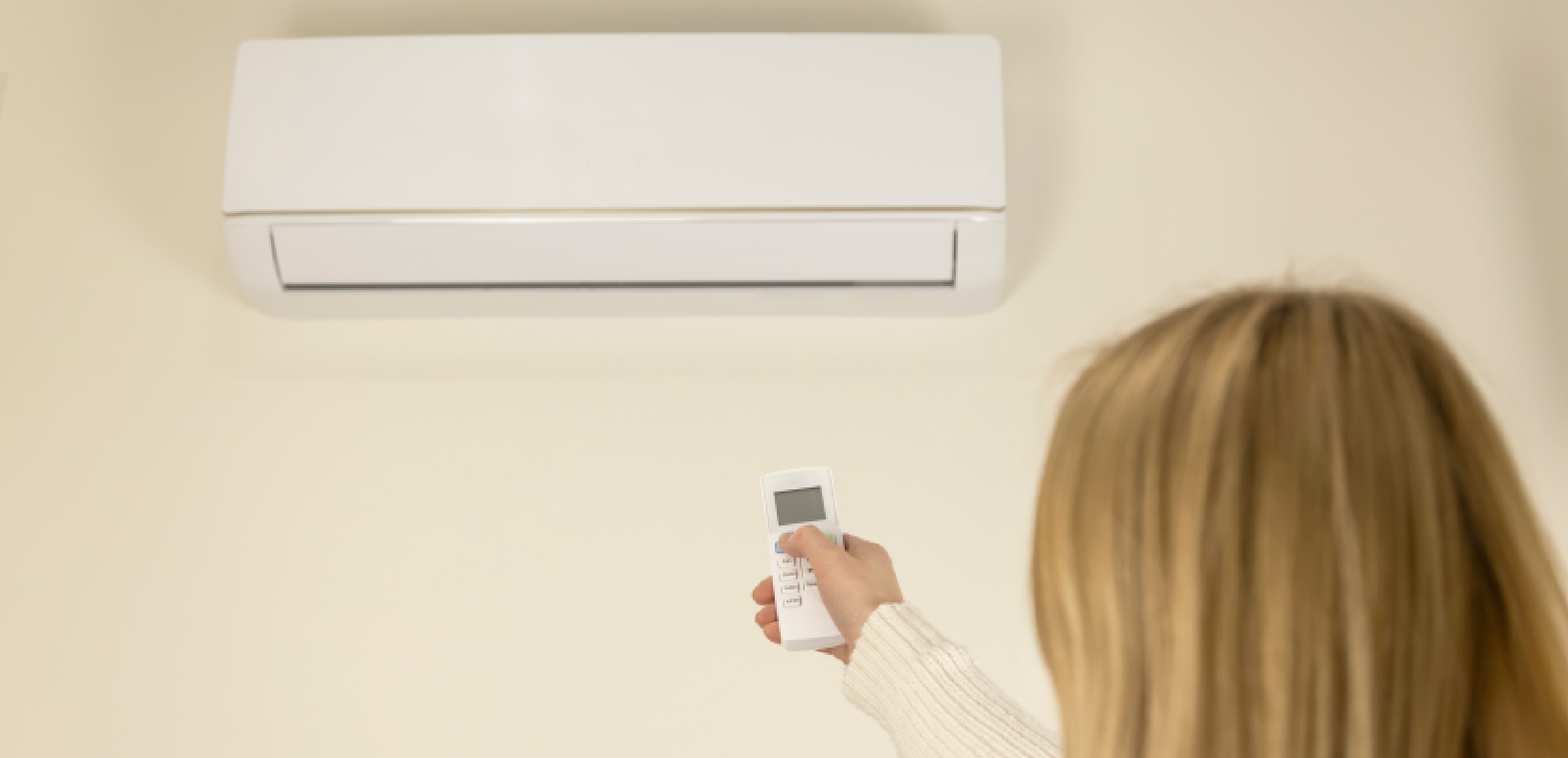
Before turning it on again, it is highly recommended to carry out a full check of the system. This usually includes checking and cleaning the filters, inspecting the condition of the indoor unit (split), ensuring the air vents are clear, checking the outdoor unit, and confirming that it is working correctly overall.
How to tune up your air conditioning before turning it on
Tuning up your system is a smart decision to maximise its efficiency and extend its lifespan. An annual service can reduce the likelihood of major faults and improve the quality of the air you breathe.
What to check before the first use of the season
The first step is to inspect the main components. It is essential to check that the indoor unit has not accumulated too much dust and that the ventilation grilles are completely clear. You should also check the condition of the outdoor unit, making sure there are no objects, bird nests, or dirt blocking the air intake.
Quick servicing checklist
Cleaning filters: this is the most basic step to maintain air quality and efficiency.
Inspecting the indoor unit: this is essential to carefully remove dust from the casing and grilles.
Outdoor unit: clean and clear away any elements that might obstruct the device.
Drain: confirm that the pipe is not blocked.
Once you have completed all the points on our checklist, you can do a test run and check that there are no strange noises or bad smells.
What you can do and what is best left to a technician
Cleaning the filters and carrying out superficial maintenance on the units are perfectly within the capabilities of any user. However, regulations require that maintenance be carried out by an authorised professional if your installation exceeds 5 kW output. This will also be necessary if you detect:
Gas leaks: if you notice the unit isn't cooling as it should or you see oil stains, it could be due to a refrigerant gas leak. Handling the gas without the proper knowledge is dangerous.
Broken components: trying to fix an internal part on your own without sufficient technical knowledge can cause a major and much more expensive breakdown.
Basic air conditioning cleaning step-by-step
If you want to delve even deeper into cleaning your air conditioning unit, you can consult our guide.
How to clean the filters correctly
Filters act as a barrier against mites, bacteria, and viruses. To clean them, we recommend:
- First, open the cover of the indoor unit and carefully remove the filters.
- Use a vacuum cleaner to remove the dust.
- If they are very dirty, submerge them in cold water (never hot, as this could damage them) with neutral or antibacterial soap.
- Rinse with plenty of water and leave to dry in the shade, away from direct sources of light or heat.
How to clean the indoor unit and grilles
Once the filters have been removed, take the opportunity to clean the inside of the unit. Use a cloth dampened with water and neutral soap to wipe down the casing, paying special attention to the air outlet grilles, which is where the most dirt accumulates. Remember to dry it well with a clean cloth before putting the dry filters back in.
What to check on the outdoor unit and the drain
The outdoor unit is just as important as the indoor device. We recommend cleaning the condenser coil with a brush or compressed air. In addition, it's necessary to check that the drain pipe is flowing correctly; if it is blocked, the condensation water could end up dripping from the indoor unit inside the house.
A deeper clean?
In this case, you should contact a professional who has the tools to carry out cleaning with compressed air or specific chemicals.
Signs your air conditioning needs a service
Keeping a close eye on how our air conditioning operates allows us to spot potential problems in time. If you find yourself facing a breakdown, our colleagues at Endesa's maintenance and repair service will be happy to help.
If it cools less than normal
If you notice that you have to lower the temperature significantly to feel the effect of the air conditioning, it may be due to blocked filters obstructing the airflow or, in more serious cases, a refrigerant gas leak. A dirty or leaking system can increase your bill by up to 20% as it requires more power to operate.
If it smells bad when turned on
A bad smell indicates that bacteria or mould are multiplying in the filters or the indoor unit's coil. Carrying out a thorough clean of the filters and internal pipes usually solves this problem and radically improves air quality.
If it drips, makes noise, or loses performance
Persistent dripping usually indicates a problem with the drain. On the other hand, strange noises can be symptoms of mechanical faults. In modern systems, the remote control usually displays different error codes to identify exactly what is failing.
How often to service your air conditioning
An annual service before summer can be key to avoiding unpleasant surprises in the middle of a heatwave.
At-home check before summer
It is highly recommended to carry out a basic check and clean before the first use in summer. This ensures you won't spread the dirt accumulated over winter all around the room when you turn it on.
When an annual service is advisable
Although you can handle basic maintenance yourself, an annual technical service carried out by an expert team is recommended to check internal components, gas pressures, and electrical connections. Some manufacturers warn that this in-depth professional service should not be spaced out by more than 3 years.
If you also use it in winter, how often to check it
If your system has a heat pump, you must repeat the filter cleaning process at the beginning and end of winter. Constant use throughout the year requires much closer monitoring of cleanliness to maintain the systems' efficiency.
How to use your air conditioning efficiently after a service
Once the system is spotless, the next step is to use it in the best possible way to avoid excessively high electricity bills.
Recommended temperature to save money without losing comfort
The ideal temperature in summer is between 24°C and 26°C. Setting the thermostat to 25°C is usually the best balance for your health and your wallet. Bear in mind that, according to the IDAE (the Spanish energy agency), every degree you lower the temperature can lead to a 7% increase in energy consumption in summer.
Another way to avoid excessive spending is to set your system to the air conditioning mode that helps you save the most.
Ventilation, blinds, and habits that help cool better
The environment of your home has a major influence on the effort your system has to make:
Awnings and blinds: it is advisable to lower them during sunny hours, as the less light that enters, the less heat gets into the house.
Ventilating the house: it is best to do this first thing in the morning or at night when the air is cooler.
Doors and windows: ensure you keep them closed while the air conditioning is running to prevent cold air escaping.
Programming and smart use of the system
Starting up the systems consumes a lot of energy. Conversely, it is much more efficient to use programmable thermostats to maintain a stable temperature. You might also be interested in knowing how to programme your air conditioning in the most economical way possible.
Frequently asked questions about air conditioning servicing
What happens if I don't clean the filters?
The device will consume more energy to cool, the air will be of poorer quality, and you could experience breakdowns due to the system overworking.
How long does a basic service take?
Normally, a superficial clean and check shouldn't take you more than 30 minutes.
How often should an indoor unit be cleaned?
Ideally, it should be done at the beginning and end of each season (summer and winter if it has a heat pump).
Can I check the refrigerant gas myself?
No. You can do a visual inspection looking for leaks, but any handling or refilling must be carried out by an authorised professional.
What is the ideal temperature in summer?
It is recommended to keep it stable at around 25°C to ensure comfort without sending your bills soaring. You can find more information about the ideal temperature here.
If, after following this guide, you still need an expert to handle the service at a more technical level, we recommend contacting our professionals.
{{content.phone.title}}
{{content.phone.text}}
{{content.phone.phoneText}}
{{content.form.title}}
{{content.form.text}}
{{content.form.success.title}}
Take a minute to find the product that best suits you:
{{firstStep.title}}
Take a minute to find the product that best suits you:
{{title}}
{{content.phone.title}}
{{content.phone.text}}
{{content.phone.phoneText}}
{{content.form.title}}
{{content.form.text}}
{{content.form.success.title}}
You don't need to adapt to Endesa's tariffs because they adapt to you. If you go to our catalogue you can compare the different tariffs for yourself. Or if you prefer, you can answer a few questions and we will take care of comparing all the different electricity and gas tariffs and then make a customised recommendation.
Take a minute to find the product that best suits you:
{{title}}
{{content.phone.title}}
{{content.phone.text}}
{{content.phone.phoneText}}
{{content.form.title}}
{{content.form.text}}
{{content.form.success.title}}
You don't need to adapt to Endesa's tariffs because they adapt to you. If you go to our catalogue you can compare the different tariffs for yourself. Or if you prefer, you can answer a few questions and we will take care of comparing all the different electricity and gas tariffs and then make a customised recommendation.
Comparison of Electricity and Gas Tariffs
You don't need to adapt to Endesa's tariffs because they adapt to you. If you go to our catalogue you can compare the different tariffs for yourself. Or if you prefer, you can answer a few questions and we will take care of comparing all the different electricity and gas tariffs and then make a customised recommendation.
Do you want to see all our offers?
Spend a minute to find the product which best adapts to you:
{{firstStep.title}}
Spend a minute to find the product which best adapts to you:
{{title}}
{{content.phone.title}}
{{content.phone.text}}
{{content.phone.phoneText}}
{{content.form.title}}
{{content.form.text}}
{{content.form.success.title}}
Spend a minute to find the product which best adapts to you:
{{title}}
{{content.phone.title}}
{{content.phone.text}}
{{content.phone.phoneText}}
{{content.form.title}}
{{content.form.text}}